Best Teething Toys for Puppies: The Complete 2026 Buyer's Guide
Share
If you are stepping over a shredded shoe on the way to your coffee, you are not alone. Between roughly 3 and 7 months, your puppy is losing 28 baby teeth and growing 42 adult ones, and their gums ache for most of it. Chewing is not misbehavior. It is a biological need, and the best teething toys for puppies give that need a safe place to land.
At SodaPup, we view puppy chewing through our SPICES Canine Enrichment Framework: Sensory, Physical, Instinctual, Cognitive, Emotional, and Social. Teething sits at the intersection of the Physical and Instinctual pillars, and a well-chosen toy can also add Cognitive and Emotional benefits when it holds treats. This updated guide covers the puppy teething timeline, what to look for in a teething toy, how nylon, rubber, and rope compare, and which SodaPup toys we recommend at each stage.
Why Puppies Chew So Much During Teething
Baby teeth begin falling out around 12 to 16 weeks, and each erupting tooth irritates the gum line. Chewing on something with the right give provides counter-pressure that can ease some of that discomfort, much like a teething ring for a human infant. The American Kennel Club's puppy teething timeline describes this window as developmentally normal, typically settling by 7 to 8 months, as long as the puppy has appropriate things to chew along the way.
This is also when habits form. A puppy offered only dull toys keeps testing furniture and cords. A puppy with a rotation of textured, treat-friendly options learns early that the toy basket beats the couch leg.
The Puppy Teething Timeline at a Glance
- 8 to 12 weeks: Baby teeth are in place. Mouthing is exploratory.
- 12 to 16 weeks: Incisors begin to fall out. Gums get tender.
- 4 to 6 months: Peak chewing as canines and premolars erupt.
- 6 to 8 months: Adult teeth finish coming in. Chewing shifts from soreness relief to jaw strength and habit.
What Makes a Good Teething Toy
- Appropriate firmness. Tender-gummed puppies do best with some flex. Older puppies can handle firmer nylon.
- No hard edges that can chip baby teeth. Real bones, antlers, and rigid plastic are generally discouraged for puppies.
- Food-safe, non-toxic material. Puppies mouth everything, so look for FDA-compliant materials without coatings that flake.
- Durability that fits the bite. A toy that shreds in one sitting wastes money and can create choking hazards.
- Right size. Too small is a swallowing risk, and too large will not get chewed.
Nylon vs. Rubber vs. Rope for Teething
Nylon is the most durable option. The ring shape of our Diamond Ring Nylon Teething Ring lets puppies gnaw along a curve instead of concentrating pressure on one point. For puppies who like flavor, the Chicken Flavored Teething Ring adds extra appeal.
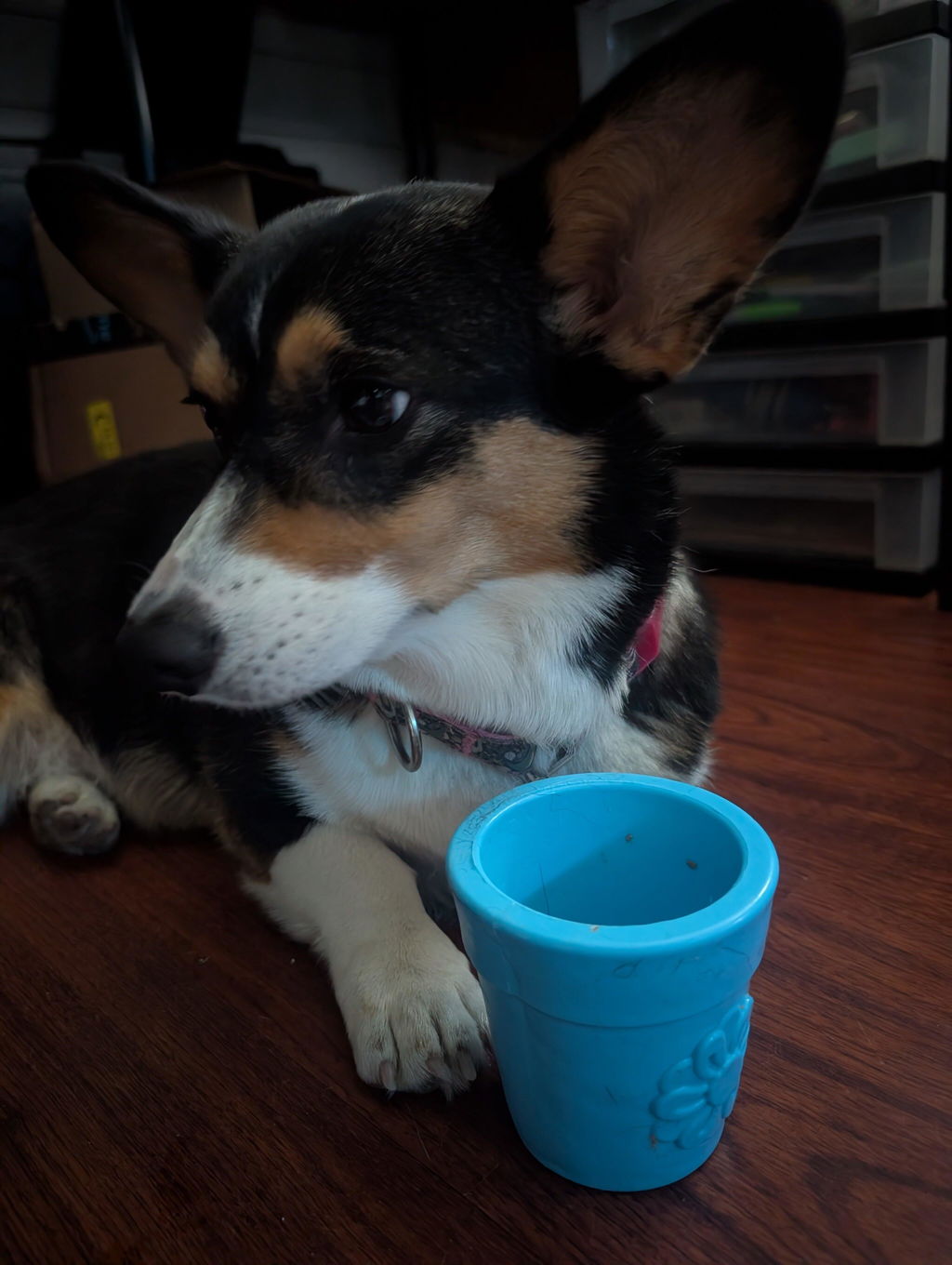
Rubber has more natural give, which feels gentler on very sore gums. Hollow rubber toys also work as treat dispensers, so they cover Physical and Instinctual needs at once. Our Puppy Can Toy is sized and softened for this stage rather than scaled down from an adult toy.
Rope is fun for tugging, but we caution against it for unsupervised teething. Loose fibers are easy to swallow, and rope wears unpredictably.
Best SodaPup Teething Toys for Puppies
Best Overall: Diamond Ring Nylon Teething Ring
The Diamond Ring is our top pick for determined chewers. It is made in the USA from durable nylon, and the open shape is easy for small mouths to grip from many angles.
Best for Tender Gums: Puppy Can Toy
The Puppy Can Toy is a softer rubber chew that doubles as a small treat dispenser, which helps build positive associations with a crate or new home.
Best for Graduating Power Chewers: PUP-X Rubber Bone
Once most adult teeth are in, the PUP-X Rubber Bone keeps up with real bite force and floats, so it moves outdoors for fetch and water play after teething ends.
Best for Soothing Sessions: Lick Mats
Licking is calming, and a chilled, puppy-safe smear on a mat gives sore gums and busy brains a break. Browse our lick mats for options, and see our guide on what to put on a lick mat for ideas.
How to Introduce a New Teething Toy
- Offer it during a calm moment so the toy is linked with relaxation.
- Supervise the first sessions and watch for loose chunks or swallowing attempts.
- Add a treat or safe smear inside a hollow toy to build interest.
- Rotate two or three toys every few days to keep novelty high.
- Retire worn toys once you see a worn-through spot, sharp edge, or separated piece.
Frequently Asked Questions
How long does puppy teething last?
Puppies start losing baby teeth around 12 to 16 weeks, and the full set of 42 adult teeth is usually in by 6 to 7 months. Larger breeds can keep chewing hard into 8 or 9 months. The most intense chewing typically peaks between 4 and 6 months.
What are the best teething toys for puppies?
The best teething toys have a little flex, are made from food-safe nylon or rubber, and match the puppy's current stage. For very sore gums, a softer rubber toy like the SodaPup Puppy Can Toy works well. For puppies that chew harder, a durable nylon teething ring like the Diamond Ring is a strong all-rounder.
Is nylon or rubber better for a teething puppy?
Both have a place. Softer rubber is gentler on tender gums during peak eruption around 4 to 5 months, while firmer nylon holds up once more adult teeth are in. Many owners keep one of each in rotation.
Can teething toys damage a puppy's teeth?
Yes, if they are too hard. Real bones, antlers, hooves, and rigid plastic are commonly discouraged for puppies because they do not flex under bite pressure and can contribute to tooth fractures. Choose purpose-built toys and supervise new ones.
Can I freeze a teething toy for my puppy?
A chilled toy can soothe sore gums. Freeze a stuffed rubber toy or a lick mat smeared with plain yogurt or puppy-safe food, and avoid freezing hard nylon or leaving ice-hard items for long sessions. Always supervise.
Why does my puppy chew everything except their toys?
Usually it is texture, novelty, or timing. Puppies like items with give, such as shoes and furniture corners. Rotating two or three teething toys every few days and adding a treat inside a hollow toy helps redirect the habit.
Give Your Puppy a Better Outlet
Teething does not have to mean months of casualties around the house. Soft rubber early on and durable nylon as your puppy grows redirects that instinct somewhere productive. Explore our durable nylon chew toys and treat dispensers to build a rotation that grows with your puppy.